
Steve explains that the mind and body are naturally designed to be relaxed. Stress occurs when something internal or external disrupts this balance and signals that something needs to be addressed.

The Neuroscience of Stress
What’s Really Happening
ABOUT THIS COURSE
Stress is often misunderstood and can feel complicated to explain. In this course, Professor Steve Peters simplifies the neuroscience behind stress and explains what is happening in the mind and body when we experience it.
Steve shows that the mind’s natural state is relaxed. When something disrupts that balance, the mind sends a message in the form of uncomfortable emotions such as anxiety, anger, or irritability. These feelings are signals designed to alert us that something needs attention.
Using The Chimp Model, Steve explains how the Chimp, Human, and Computer systems each play a role in the stress response. Understanding how these systems interact helps us recognise stress more clearly and form practical plans to resolve it.
WHAT YOU’LL LEARN
This course explains the basic neuroscience behind stress and how the mind responds when something disrupts our natural relaxed state. The focus is on understanding how the brain detects stress and how the Human can respond with effective plans to restore balance.
Emotions such as anxiety, anger, or irritability are signals that something requires attention. These feelings are designed to prompt action so that balance can be restored.
Steve explains the role of the amygdala and how it interprets potential threats. This system is designed to respond quickly, sometimes before we have fully assessed what is actually happening.
The course explores how the hypothalamus, pituitary gland, and adrenal glands work together to release hormones such as cortisol and adrenaline during stress.
The Human’s role is to recognise that stress is occurring and form an effective plan to address the problem or reassure the emotional system.
If stress signals are not recognised or no effective plan is formed, the emotional system increases the intensity of the message, often turning the dial up on the emotional response.

Meet Professor Steve Peters
Professor Steve Peters is a consultant psychiatrist, bestselling author, and creator of The Chimp® Model. For more than 40 years, he has helped people understand their mind and improve their psychological wellbeing, working across NHS mental health services, education, and elite sport — including British Cycling, Liverpool FC, England Football, and Team GB.
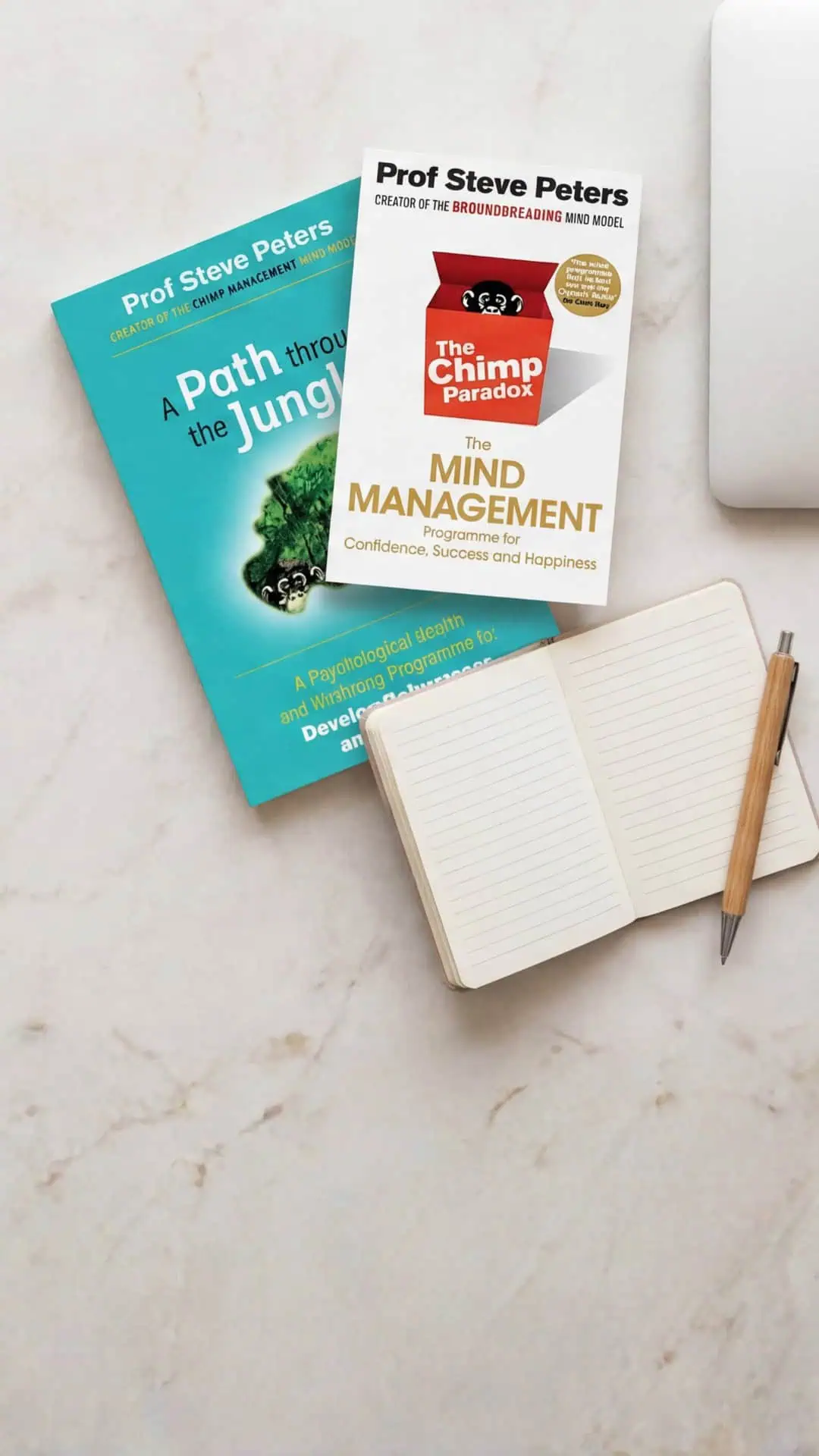
He is the author of several bestselling books, including The Chimp Paradox and A Path Through the Jungle, and continues to teach simplified neuroscience to help people manage their emotions, thinking, and behaviour.
Our Pricing
Best Value
£80 per year
Annual Subscription
(One-Time Payment)
Full access to all courses for 12 months.
£8 per month
Annual Subscription
(Billed Monthly)
Full access to all courses for 12 months.
£20 per course
Single course purchase
No subscription — 12-month single course access.



Course reviews
How to understand and work with stress
By Rocket 🚀 June 8, 2026
I generally need a level of stress in my life to propel me forward and keep me productive. This course helps me understand how to work with the signal from the chimp (or the computer) to shift into human mode and take forward with a plan
As always Steve offers practical insights as to what is happening and how to address/manage it – which is within my controlIn my work and sport, we are constantly dealing with the unknown and nothing completely goes the way we expect it, which I really enjoy but sometimes the stress starts to blunt my effectiveness. Rocket will double down on the message but the human can act with a plan and Rocket goes back to sleep. Enjoyed the nerdy neuroscience too about how all 3 systems are involved. Thank you Steve!